
Material feed
Dose the required mass of expandable EPS beads into the pre-expander.
Vacuum-assisted EPS bead pre-expansion with controlled steam, weighing feedback and integration into automated aging and molding systems.
Discuss Your EPS Pre-ExpanderExplore the Technology*The ±0.3 g/L reference target applies to selected PEV-series conditions, not every application. Actual results depend on EPS resin, density setpoint, machine configuration and agreed test methods.
An EPS pre-expander is used to prepare expandable polystyrene (EPS) beads at a target bulk density before aging and subsequent shape molding. Controlled steam heating expands the beads; appropriate downstream conditioning and storage help prepare the material for stable feeding into molds.
ALESSIO combines pre-expansion equipment with vacuum-assisted processing, online weighing and density feedback options, forming the upstream part of a coordinated EPS production line.
Pre-expansion is a controlled materials-processing step. Consistency requires the selected EPS grade, suitable utilities, repeatable recipes and a defined density measurement method.
Dose the required mass of expandable EPS beads into the pre-expander.
Adjust steam input and timing to initiate and control bead expansion.
Process beads toward the specified bulk-density operating point.
Use the configured vacuum-fluidization process where equipped.
Measure a defined sample and adapt subsequent recipe settings.
Transfer beads to silos before feeding compatible molding machines.
ALESSIO pre-expansion solutions combine process control, automatic density feedback and material-handling options to suit the requirements of each EPS production line.
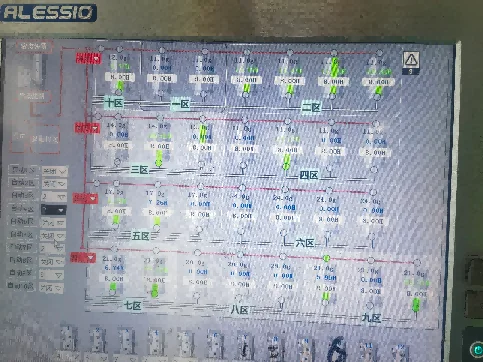
Weighing sensors and automatic density measurement provide feedback for process adjustments, reducing reliance on purely manual settings.
PE VDA configurations integrate pre-expansion with vacuum-assisted bead conditioning and handling to support a controlled production process.
Steam input and associated processing conditions can be adjusted through configured digital proportional control and recipes.
Pre-expanded beads can be assigned to aging silos based on grade, density target and required aging interval.
Depending on the control architecture, machine status and silo data can be integrated into the plant monitoring system.
Pre-expander selection depends on raw-material grade, throughput, density range, steam availability and downstream handling.
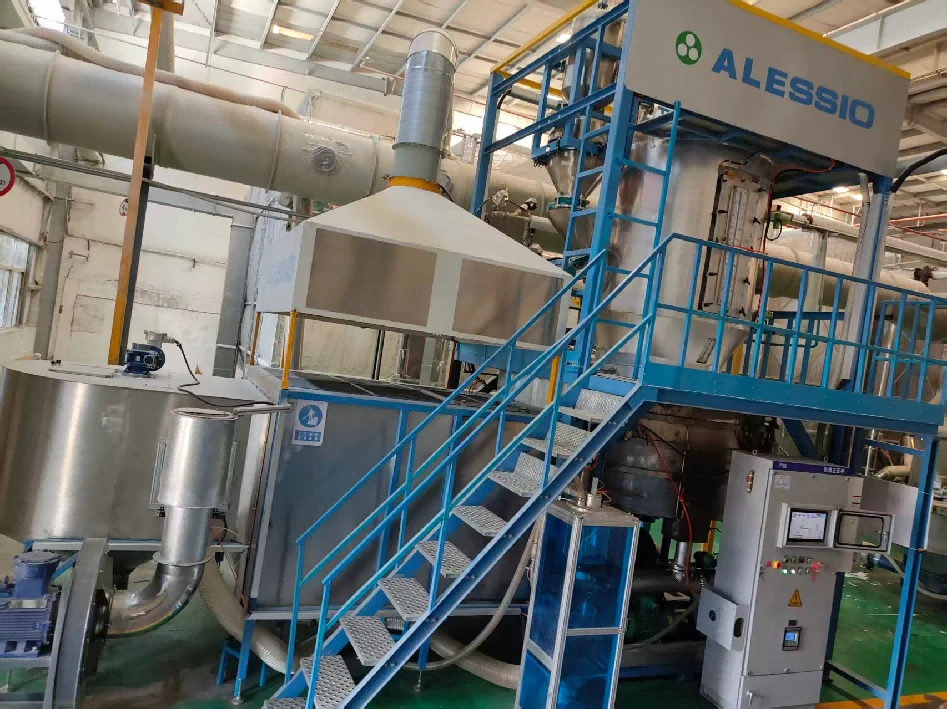
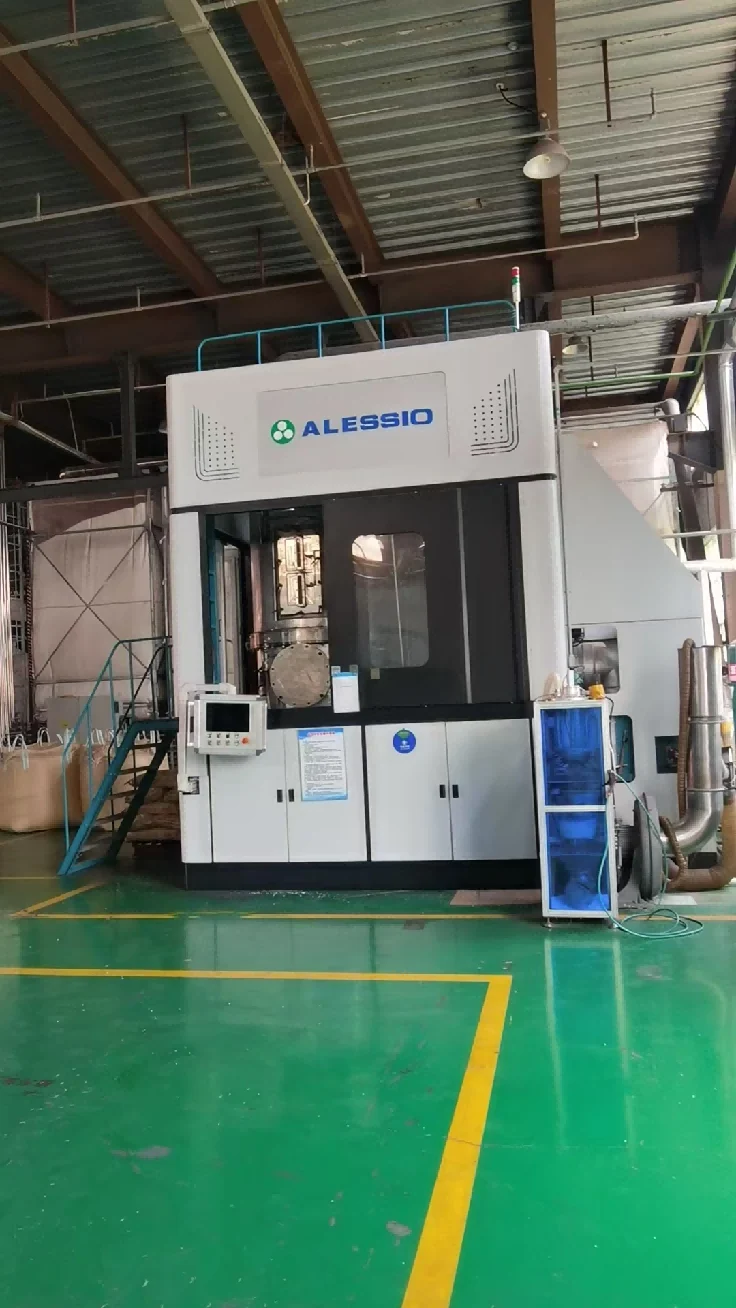
The ALESSIO PE VDA range covers configurations from PE0.4VDA to PE2.5VDA. A PE2.5VDA system is shown in operation at an EPS packaging facility in Jingzhou.
Our engineering team selects the appropriate configuration according to your EPS resin, target density, hourly production capacity and available utilities.
PE2.5VDA pre-expander installation at an EPS packaging facility in Jingzhou.
A good pre-expander should be matched to material aging capacity, bead transport arrangements and molding-machine consumption — not specified in isolation.
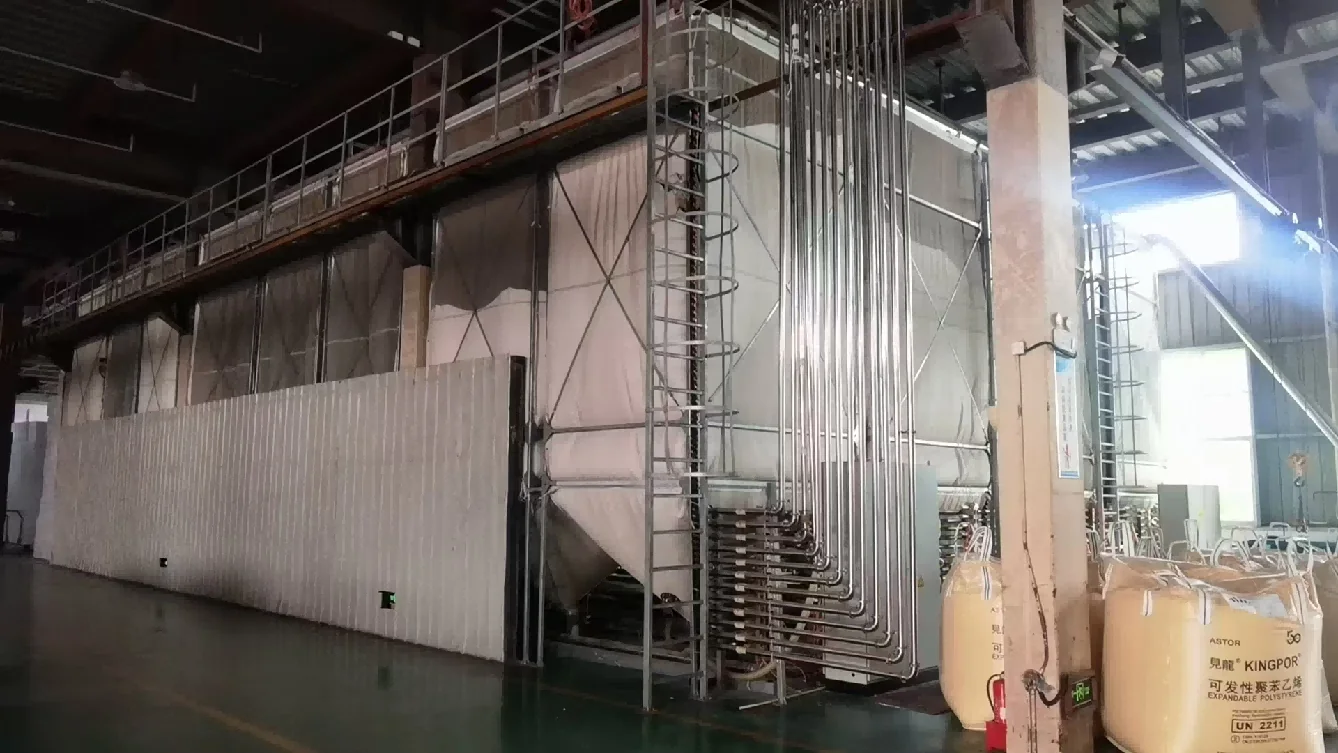
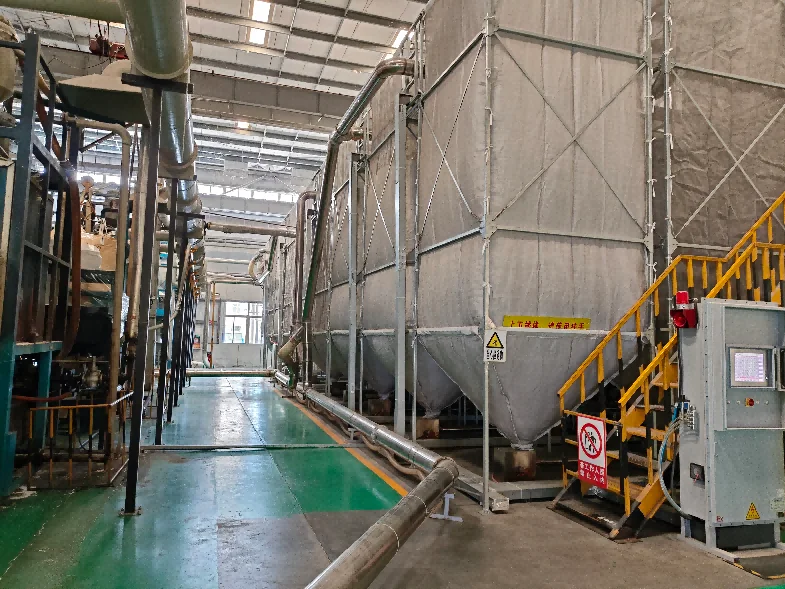
Automated EPS bead-aging and storage silos at the Yixing packaging facility.
Proper aging time, density segregation and bead transfer are essential when multiple molding machines consume different EPS recipes. ALESSIO integrates designated aging silos, automated material routing and production monitoring as part of its EPS manufacturing solutions.
Explore pre-expansion equipment integrated with automated material storage and EPS molding at customer production facilities. Each system is engineered around its application and plant conditions.
At an EPS packaging plant in Yixing, a vacuum pre-expander works alongside automated bead-aging silos and multiple shape molding machines. The coordinated layout supports material preparation and supply for a varied product mix.
Density-control requirements are defined around the EPS grade, operating setpoint and agreed measurement method. Performance values for different processes should be compared under equivalent conditions.
At the Jingzhou appliance-packaging facility, an ALESSIO PE2.5VDA pre-expander operates as part of an integrated production system with bead aging, automated molding and process monitoring. The configuration incorporates density feedback and vacuum-fluidization technology.
Density stability and throughput depend on EPS grade, target bulk density and process configuration. Our team can help define a suitable sampling and acceptance protocol for your application.
The right model is defined by product requirements and the full production system. Use the checklist below when requesting a technical proposal.
| Information required | Why it matters |
|---|---|
| EPS resin grade and supplier | Raw-bead characteristics and processing recommendations influence achievable density and recipe settings. |
| Target bulk density (g/L) | Specify the production range, nominal setpoint and tolerances, ideally with your agreed sampling method. |
| Hourly throughput (kg/h) | Sets machine-size and batch-cycle requirements; quote against a defined resin/density condition. |
| Steam and cooling utilities | Include available steam pressure and quality, supply capacity and cooling arrangements. |
| Bead aging / silo system | Required aging duration, batch segregation and number of downstream molding machines influence system design. |
| Controls and site standards | Specify process reports, PLC/network interfaces, destination-country safety and electrical requirements. |
Accuracy is a test definition, not only a number. Please specify the resin, density setpoint, sample size, measuring method, repeat count and acceptance criteria. The ±0.3 g/L density-control reference applies to selected PEV operating conditions. Specify the test conditions and acceptance requirements when evaluating your proposed machine.
Watch ALESSIO EPS pre-expansion equipment in operation. The video player loads on demand to keep the page fast and responsive.
See the pre-expansion process and discuss the appropriate machine configuration for your EPS grade, target density and production capacity.
Watch directly on YouTube ↗It expands raw EPS beads using controlled thermal processing to produce material near a specified bulk-density target before aging and shape molding.
A vacuum-equipped configuration includes additional pressure-management or conditioning functions specified by the supplier. The precise process sequence and benefits should be confirmed for the proposed model and EPS grade.
Selected ALESSIO PEV configurations reference a density-control target of ±0.3 g/L. Actual performance depends on EPS grade, operating conditions and the agreed measurement and acceptance method.
The pre-expander prepares beads to a target bulk density. After suitable aging, the EPS shape molding machine fills a part-specific mold and fuses the beads into a finished component.
In an integrated system, the pre-expander can transfer material to designated aging silos and automatically feed multiple EPS molding machines, subject to the factory's material routing, recipe and silo design.
Send the raw EPS grade, target density range, desired output (kg/h), utility specifications, downstream molding demand and any applicable factory or safety requirements.
Share your EPS grade, density range, production capacity and factory layout. Our engineering team can discuss model options, automation scope and supporting utilities.