
Close & Lock
Align and secure the mold.
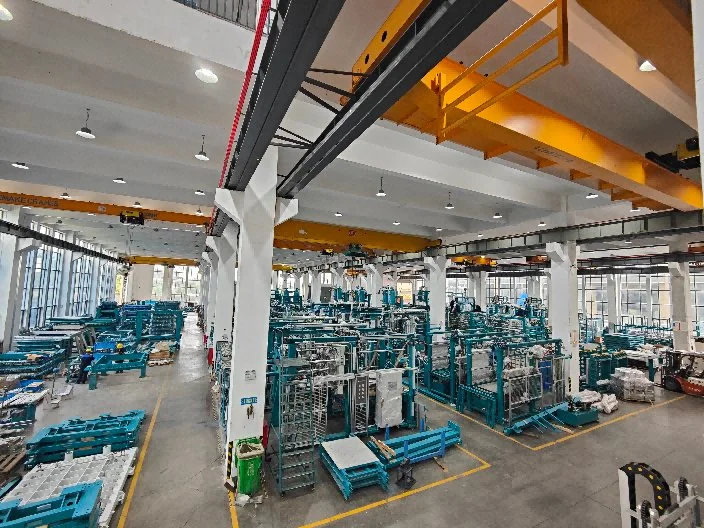
Automatic EPS shape molding equipment engineered around stable steam processes, prepared-mold quick changeover and connected robotic handling — backed by real manufacturing and customer-factory photos.
Explore Molding Systems → Discuss Your Molding Project*From supplied project/technical materials; tool preparation, configuration and site conditions determine actual changeover time.
An EPS molding machine (also called an EPS shape moulding machine) forms three-dimensional expanded-polystyrene products by filling a mold with pre-expanded EPS beads, applying controlled steam to fuse the beads, cooling the molded part and releasing it from the tooling.
It is commonly used for protective appliance packaging, reusable molded packaging elements and other shaped EPS components. Unlike an EPS block molding machine, a shape molding machine makes the final geometry directly inside a dedicated mold.
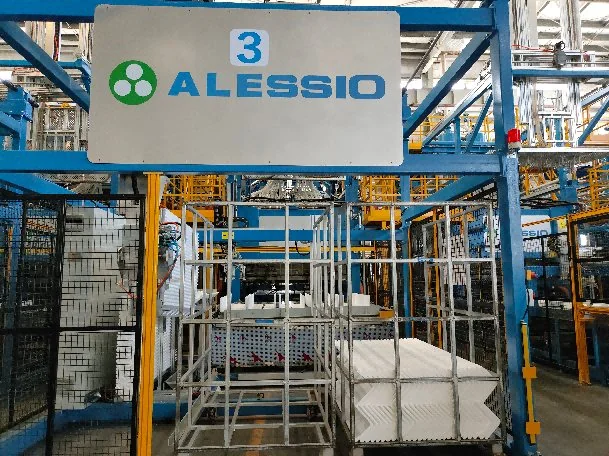
Machine cycle settings depend on part shape, bead density, mold design, steam supply, cooling capacity and product-quality requirements.
Align and secure the mold.
Feed pre-expanded EPS beads into the cavities.
Apply controlled heat to fuse bead surfaces.
Use vacuum and cooling circuits as configured.
Release the finished EPS molded component.
Operator or robot moves parts to the next process.
ALESSIO's project materials show automatic machine configurations for molding, changeover and part transfer. Exact model size, platen dimensions and drive configuration are confirmed in the technical quotation, not assumed across the entire range.
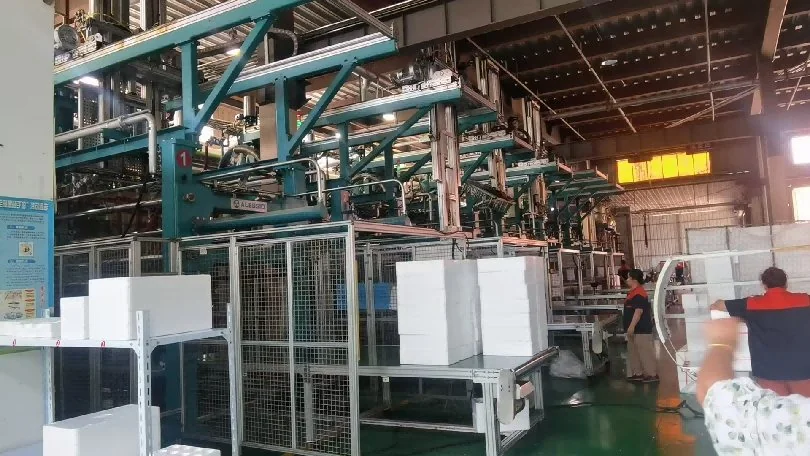
PLC-controlled molding sequences, configurable steam and cooling utilities and the option to connect the machine to an automatic material supply and outfeed system.
See equipment overview →Prepared molds, hydraulic locking and rapid service connections can reduce downtime in high-mix production when tooling and factory services are designed for QMC.
Explore QMC technology →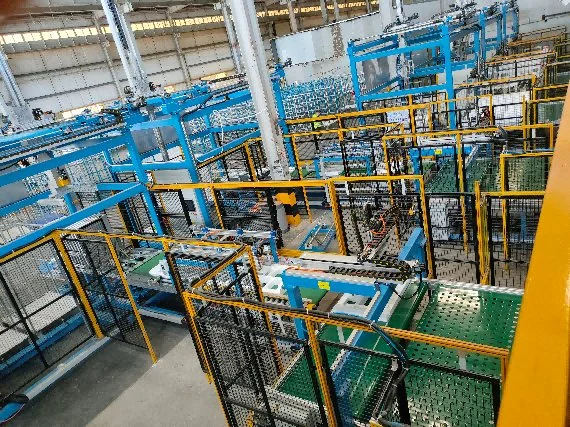
Machine operation linked with part take-out, conveyors, cage loading, inspection or filming to reduce repetitive manual handling.
View robot application →Traditional mold exchange often includes lifting and aligning the tooling, locking, reconnecting utilities and restarting the machine. An integrated QMC configuration is designed around prepared tooling and quick-access service interfaces.
The supplied materials describe approximately 2–5 minutes in specific configurations. Actual results depend on mold size, preparation, utilities, safety requirements and the definition of start/end points.
Read the ALESSIO QMC technical page →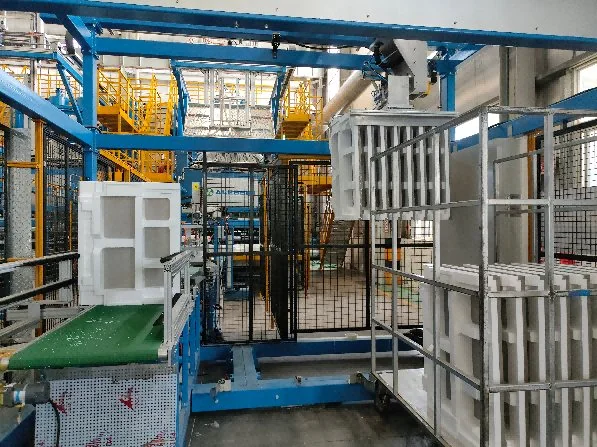
Quality and energy use depend on the complete system — pre-expanded beads, tooling, steam supply, insulation, valves, cooling and vacuum capacity.
Digital control can adjust configured steam and process parameters more consistently than manual-only setpoints. Actual performance depends on sensors, valve sizing and utility stability.
Insulated fixed/moving mold sections are intended to limit avoidable heat loss in selected equipment configurations. Savings should be validated for the customer's real product and operating conditions.
Correct condenser and vacuum-system sizing supports mold cooling, helps manage cycle stability and affects utility costs across multiple molding machines.
ALESSIO's existing product materials discuss 10–30% energy/steam improvements in described comparisons. That is a project-specific reported range, not a guarantee for every installation.
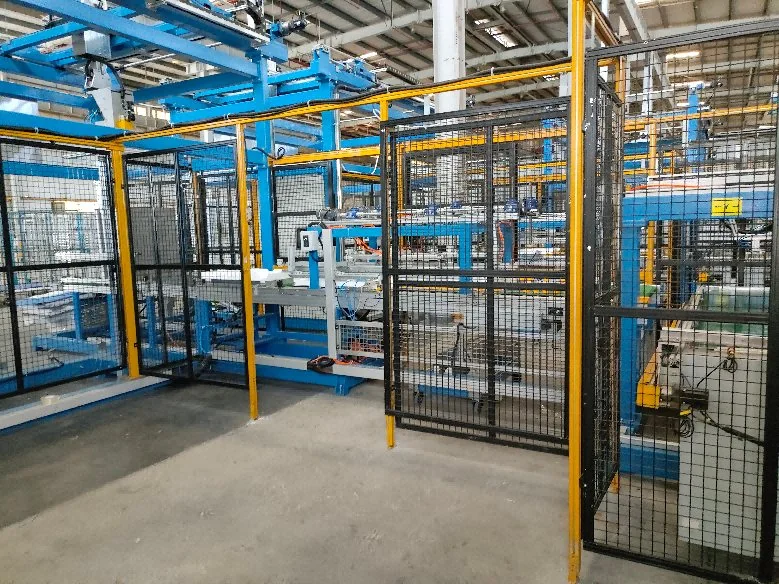
Example customer factory. The cycle times are site-reported observations for particular lines, products and operating conditions — not guaranteed specifications for every EPS molding machine.
A Jiangsu packaging workshop documented automatic EPS molding equipment, aging silos and product conveyors supporting a broad assortment of smaller molded parts.
These are observational site figures from the presentation; they are not acceptance values for an unspecified new machine.
The Hubei project material describes automated EPS molding lines with part handling, cage loading and plant utility integration for household-appliance packaging.
For comparison, the presentation describes older equipment taking about one hour for a mold change at this site. Mold type, baseline and preparation conditions differ.
Enter your planned machine count, mold changes per day and current changeover duration. The tool estimates the difference in yearly scheduled downtime — without inventing labor rates, energy costs or guaranteed equipment ROI.
This is a planning illustration, not a quotation or verified production-capacity forecast. Enter the time for your complete approved changeover sequence.
Your actual gain depends on production demand, mold readiness and the full restart sequence.
Video thumbnails load first; the YouTube player loads only when selected. The external YouTube link is also available for direct viewing.
Example of molding machinery within an integrated factory solution.
Open on YouTube ↗Before quoting a machine or designing a molding cell, these project inputs allow an engineering team to size the tooling interfaces, utilities and automation correctly.
| Project input | Why it matters for an EPS molding machine |
|---|---|
| Product drawings and EPS density | Geometry, density and target quality influence mold design, fill strategy and process conditions. |
| Mold overall size, weight, utilities | Determines machine envelope, clamp/lock interfaces and QMC compatibility. |
| Expected cycle and daily capacity | Supports machine count and downstream handling calculations; must be tested with representative parts. |
| Steam, cooling water, vacuum and air | Utility stability and capacity affect process repeatability and machine throughput. |
| Changeovers and product variants | Helps assess whether an automated mold-change system is economically justified. |
| Automation, safety and local standards | Defines robot access, fences, maintenance requirements and destination-market compliance scope. |
Need overall factory design rather than one machine? See the EPS Machine & Production Systems guide and ALESSIO Solutions overview.
Shape molding uses product-specific tooling to form finished parts such as appliance packaging. Block molding produces large EPS blocks that are typically cut into boards or other shapes downstream.
Automatic QMC is an option on compatible machine/tooling configurations. Prepared mold interfaces, automatic locking and rapid utility connections are important. Documented examples describe approximately 2–5 minutes, but the total duration depends on your setup.
It depends on the EPS material, part size and wall thickness, mold thermal design, steam and vacuum system, quality requirements and demolding automation. Examples in the supplied factory presentation are site-specific observations, not standard guaranteed cycle times.
They influence heat transfer, cooling time, bead fusion and repeatability. Stable utilities, suitable valves and tuned process settings matter as much as the machine's nominal design.
Yes, when the part geometry, cycle, safety concept and machine interface are designed together. Options can include robot take-out, conveyors, cage loading, filming and packaging.
No. The range cited in ALESSIO's existing materials is based on described comparisons. Any savings claim for a specific customer's application needs a defined baseline and a properly documented trial.
Provide part or mold drawings, target EPS density, expected output, mold dimensions, available utilities, changeover frequency, automation expectations and installation country. ALESSIO can then discuss a suitable configuration.
Send your product drawing, mold size, target capacity and utility conditions. We can discuss the relevant EPS machine architecture, tooling interfaces, QMC and handling options.